Sensors

Noiseless performance, accurate photon timing, in-pixel histograms and advanced photon processing. Three SPAD sensors built on one stacked architecture.

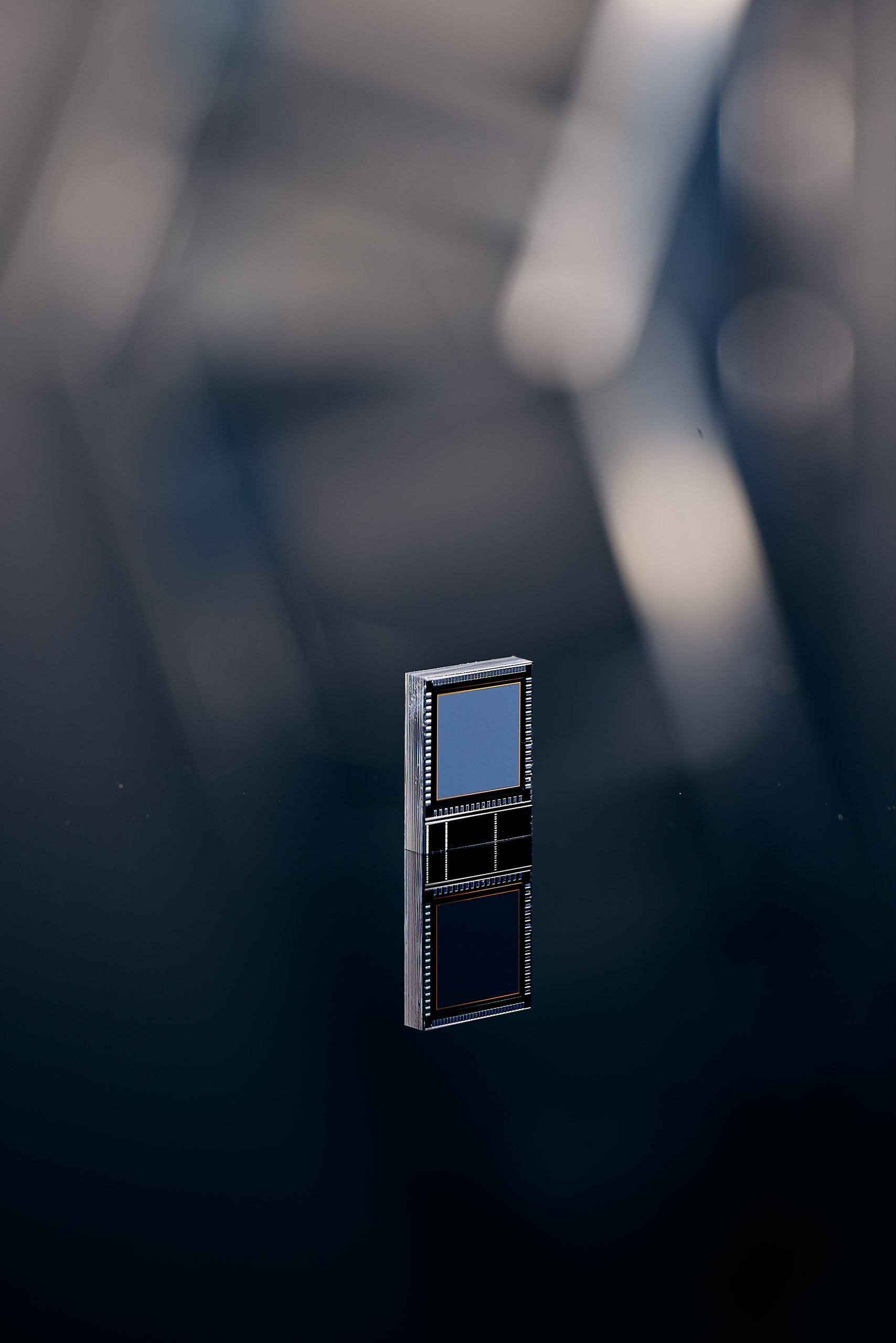
Litavis sensor

Litavis

The world's first SPAD sensor using in-pixel processing to unify imaging, timing, histogramming and photon statistics on a single chip. A software-configurable architecture combines photon counting, multi-event histogramming, programmable time gating and photon timing in a scalable SPAD array.

It is also the first SPAD-based sensor to run intensity, timing and histogramming modes simultaneously, and users adapt its behaviour in software without new hardware designs.

  • Multiple TCSPC and high-throughput TDC configurations, internal or external clocks
  • High-dynamic-range photon counting with selectable resolution
  • Windowed and coincidence-based detection
  • Combined timestamping and imaging modes
Litavis datasheet (PDF)
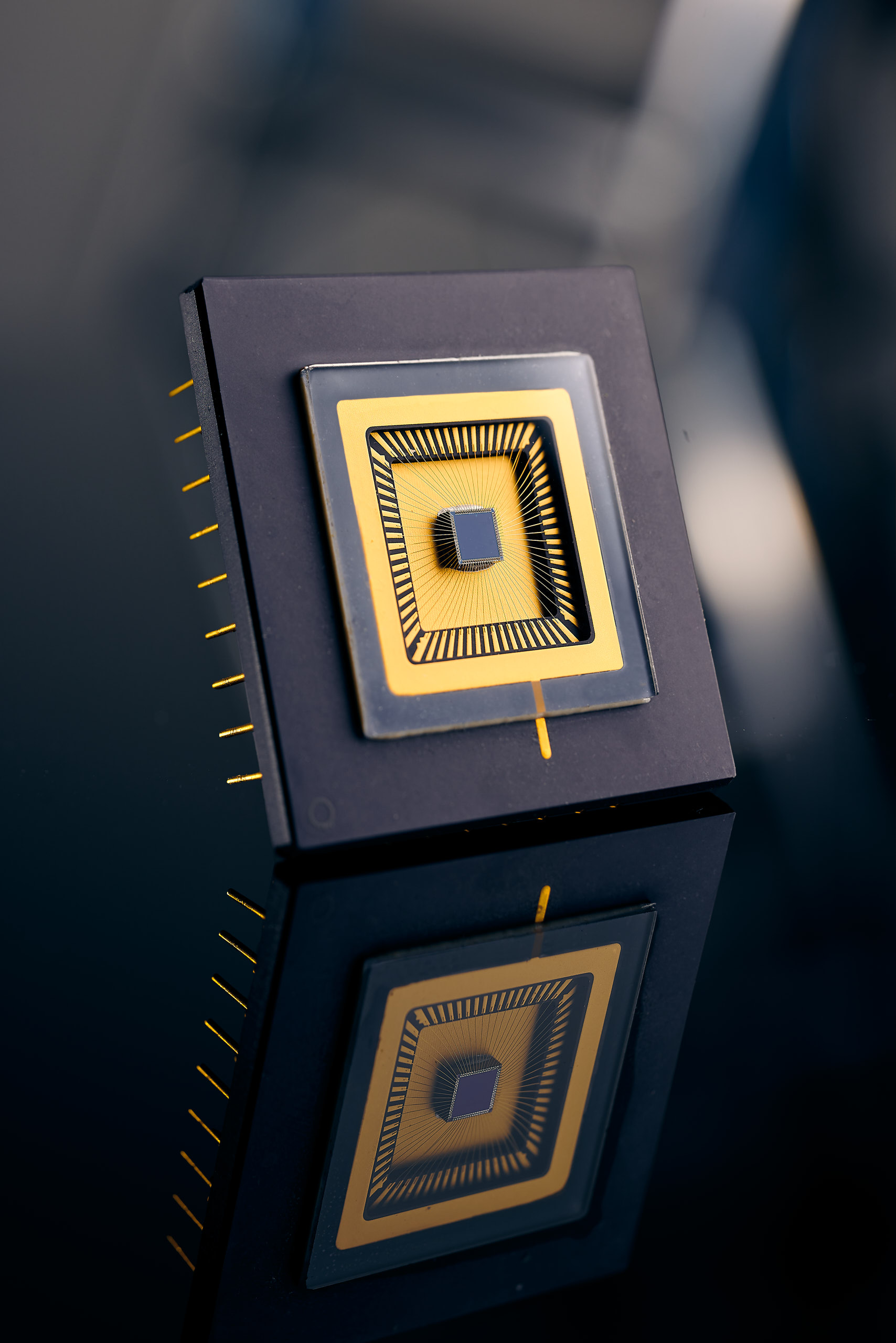
Andarta sensor in its gold package

Andarta

Built to perform a wide range of imaging tasks. Extensive on-chip preprocessing lets users reprogram the sensor for different jobs, and it is ideal for correlation spectroscopy.

At just 5 mm x 5 mm with high sensitivity, Andarta shows what SPAD technology can do in health and wearables. Modes include autocorrelation, gated mode and ultra high speed imaging.

  • Fluorescence Lifetime Imaging (FLIM)
  • Diffuse Correlation Spectroscopy (DCS)
  • Fluorescence Cross Correlation Spectroscopy (FCCS)
  • Burst imaging
Andarta datasheet (PDF)
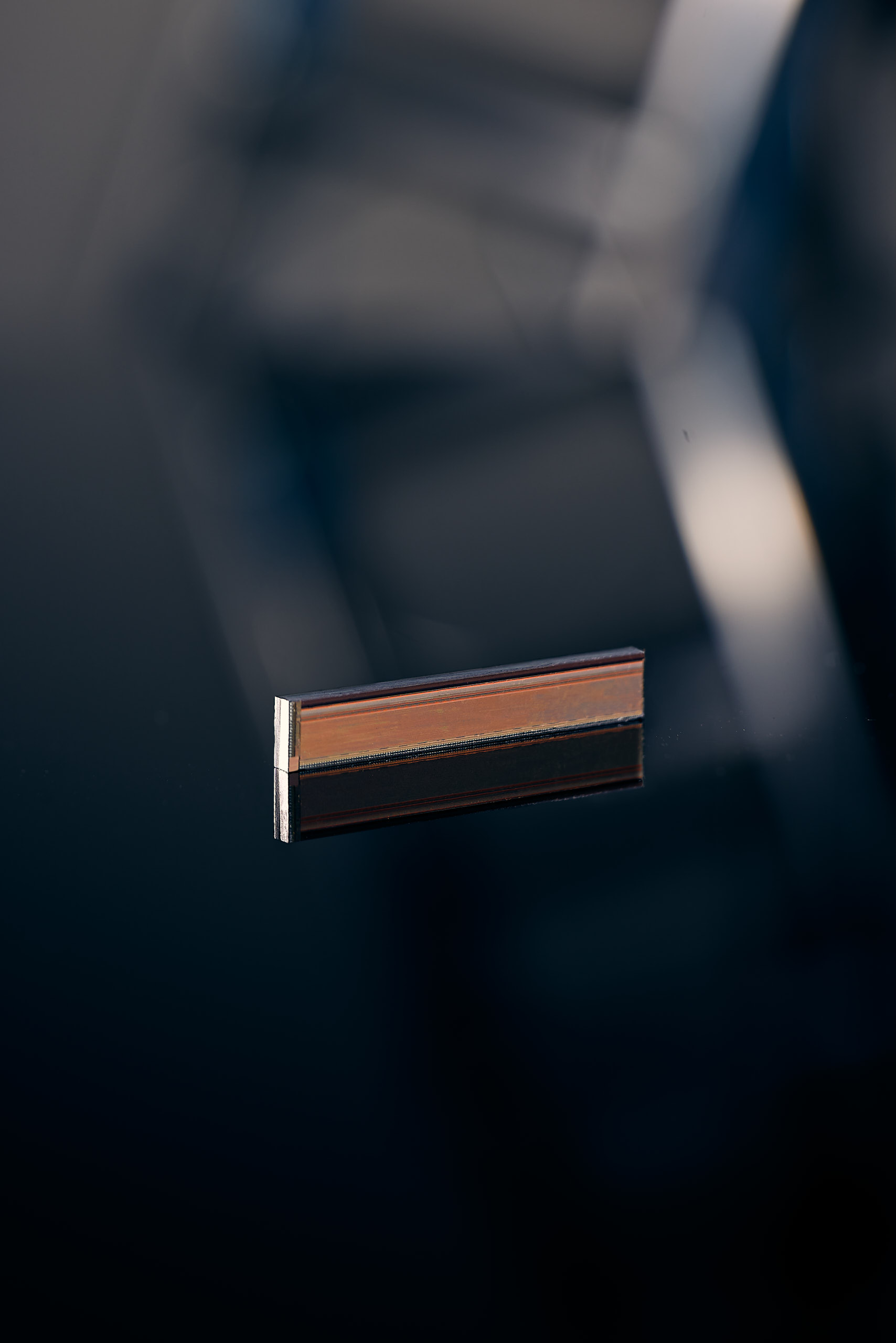
Sirona line sensor

Sirona

A 512 pixel line sensor with two different types of SPAD in each pixel, made for time-resolved multispectral beam-scanned imaging and microscopy. On-chip time binning brings photon timing to spectroscopy.

  • Raman spectroscopy
  • Fluorescence Lifetime Imaging (FLIM)
  • Time of flight
  • Quantum sensing
Sirona datasheet (PDF)

Computation as close to the photon as it gets.

Most commercial SPAD sensors only count and time photons. We put advanced electronics beneath the SPADs, the way FPGAs and GPUs moved processing next to the data.

Stacked in 3D

Digital processing layers with tens of millions of transistors sit directly under the SPAD array, at the point of detection.

Processed in real time

Image processing happens at sensor level, which cuts latency, power and system complexity compared with shipping raw data off the chip.

More from each pixel

Pixel optimisation and on-chip analysis such as autocorrelation extract more information from every detected photon.

Need a sensor evaluated for your system?

Request a conversation
Singular Photonics
Orchard Brae House, 30 Queensferry Road
Edinburgh EH4 2HS
info@singularphotonics.com